
Johnston County Court Record Requests
If you lack a case number, open the North Carolina eCourts Portal first. Search by name or number there. Write down the case number, the Johnston County location, the document or event title. Also note a rough date. The Portal's public Case Summary and Register of Actions often serve civic reference well. They never replace a file copy. For an actual document, a certificate, or an older record, contact the Johnston County Clerk of Superior Court. The filing county keeps the file.
Johnston County gives you several ways in. The Portal covers public case information. Call the Clerk at (919) 209-5400 to identify a file or ask about access. To inspect a file or use a public self-service terminal, visit 207 E Johnston St, Smithfield, NC 27577. When payment is required, mail money orders or certified checks to PO Box 297, Smithfield, NC 27577. The clerk publishes no Johnston email route for county case-file requests. Do not assume one exists.
- Find the case number, county, event or document title, and approximate date through Portal or existing court papers.
- Decide whether a public Portal reference view, file inspection, plain copy, certificate under seal, certified copy, or exemplification is needed.
- Call or visit the Johnston Clerk to identify the file and verify access, page count, and total fees.
- For a mailed payment, use a money order or certified check payable to Johnston County Clerk of Superior Court.
- Receive the copy or certification from the Clerk, not from the Portal display.
Note: The NCAOC public-record request form covers agency records only. It is not the route for a Johnston County case document.
Johnston Clerk Court File Custody
Johnston runs on a unified clerk structure. One office, the Johnston County Clerk of Superior Court, is the official-file channel for Superior Court and District Court matters filed in the county. That includes civil, criminal, domestic, estates, special-proceedings, and magistrate-connected cases. A single Smithfield courthouse serves these clerk functions. The official courthouse listing shows Monday through Friday hours. They run 8:00 a.m. to 5:00 p.m. Under G.S. 7A-109, clerk-maintained records stay open during regular office hours unless a law says otherwise.
Johnston County Clerk of Superior Court
Johnston County Courthouse
207 E Johnston St
Smithfield, NC 27577
(919) 209-5400
Monday–Friday, 8:00 a.m.–5:00 p.m.
The official court-records guidance is the source for this Johnston County records image.
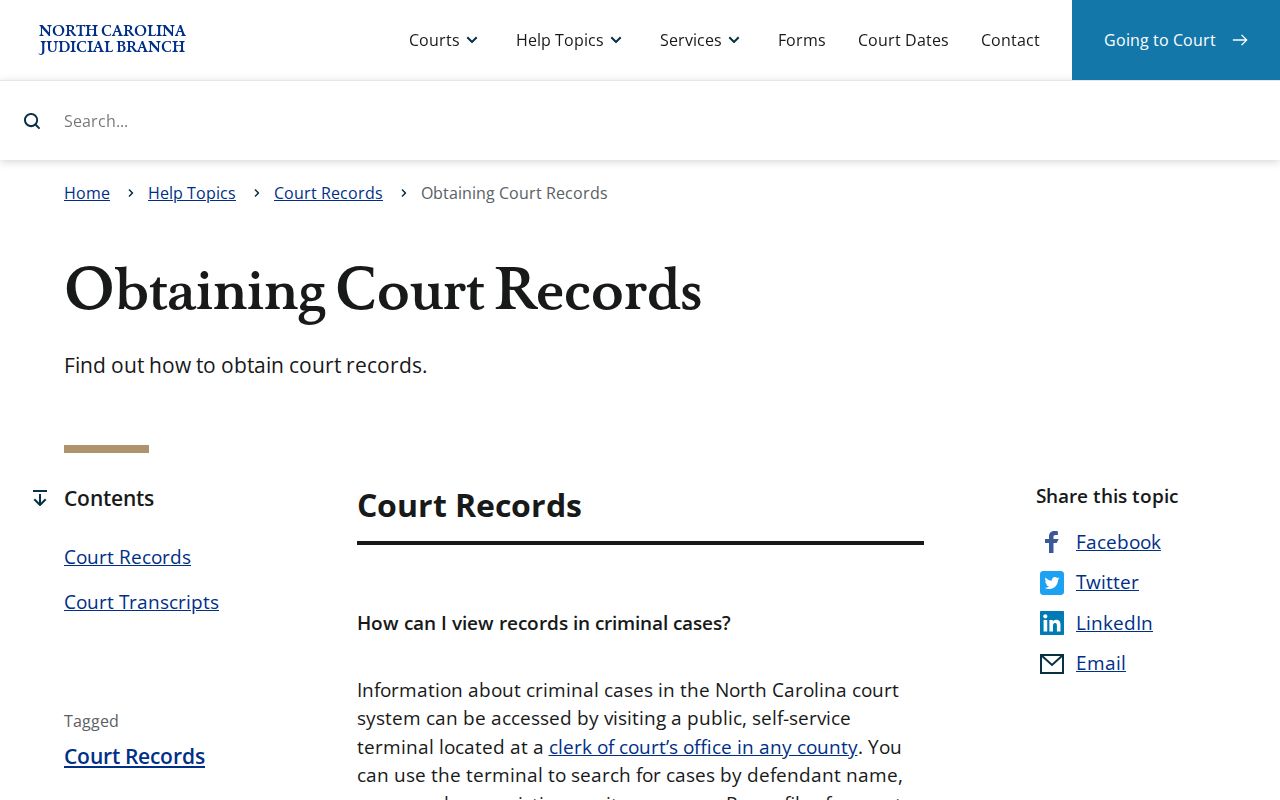
The division of labor is the point here. Online case information can assist a request, but the Johnston County clerk holds the original court file and provides the official copy path.
Kinds of Court Records
A Johnston County court record is not one product. What you need decides where to go and how to ask. The Portal's Register of Actions is a chronological view of case information. A filed document is a pleading, order, judgment, or similar paper in the court file. A certified copy carries the Clerk's certification. Some uses require it. For a formal transcript, court reporters or transcriptionists handle the work. The ordinary clerk copy counter does not.
- Register of Actions and Case Summary information through Portal.
- Filed court documents and paper files held by the Johnston Clerk.
- Plain prepared copies and certificates under seal from the Clerk.
- Exemplifications, a higher form of record certification, when specifically requested.
- Nonconfidential electronically recorded District Court audio through the applicable AOC form.
- Transcripts ordered from the court reporter or transcriptionist.
The state Obtaining Court Records resource covers terminals, files, copies, audio, and transcripts. It also warns that not every proceeding gets recorded. Criminal District Court proceedings other than H/I-felony pleas are not recorded unless a judge orders it.
Johnston Register Is Not Official
The eCourts Portal calls its event list the Register of Actions and labels it as not the official court record. That label matters. A Portal screen can show parties, case type and status, financial details when present, dispositions, or events in order. Documents may appear where they are public and docketable. Even so, none of this promises a copy of every filing. Empty Case Summary sections stay hidden. Sealed, restricted, or sensitive material is left out entirely.
Think of it this way. The Portal helps you find and read a public case event. The Johnston Clerk provides the actual file, a prepared copy, or certification. A printed page from the Register of Actions is not a certified copy. When you need a particular paper, give the Clerk the case number and the document title, then ask whether inspection, a plain copy, or a certification fits your purpose.
Court Records: What They Contain
A public Portal result and a file request can expose different layers of detail. The official training materials back the Case Summary and Register inventory described here. That inventory describes the Portal's training display, not a promise that every Johnston County file holds every item or that all of it is public.
| Case number and location | Identifies the case and county; a complete number may include a three-digit county suffix. |
|---|---|
| Case type and status | Searchable labels that classify a case and its displayed condition. |
| Register of Actions | Chronological filings and events, including notices, settings, orders, and dispositions. |
| Financial section | Appears only if data exists. Portal directs users to verify current financial details there. |
| Filed document | A pleading, order, judgment, or other file item, subject to access limits and actual availability. |
| Certified copy | A Clerk-certified document, distinct from a Portal image or public case summary. |
Johnston County code 500 can appear in early pilot case numbers. Use the actual complete number rather than inventing a format for historic files.
Johnston Court Audio Requests
Audio, transcript, document, and certified copy are four separate requests. AOC-G-114 is the statewide form for an electronically recorded, nonconfidential District Court hearing. You supply the county, the case name and number, and the proceeding date. Add the presiding judge and the courtroom. Include requester details and a signature. Juvenile and confidential hearings are excluded. The requester pays actual medium and log costs, with cash, certified check, or money order payable to the Clerk of Superior Court. A confidential recording instead calls for AOC-G-115. That one also needs court permission.
For a formal transcript, reach the reporter or transcriptionist directly. The court-records guidance says those rates are set by each reporter or transcriptionist individually. The Johnston Clerk holds the court file. It does not hold every transcript.
Copy Fees and Certification
Copy charges in Johnston County flow from G.S. 7A-308, which sets the statewide fee categories. What you pay depends on pages and the service you choose. So call the Clerk before mailing anything. Ask for the total in writing or over the phone. Keep in mind that a certificate under seal is only one line item, not the whole bill, and exemplification is a separate and pricier tier of certification.
| Item | Published amount | Johnston request note |
|---|---|---|
| Preparation, first page of each document | $2.00 | Each additional page or fraction is $0.25. |
| Certificate under seal | $3.00 | Confirm the complete copy and certification total with the Clerk. |
| Exemplification of records | $10.00 | Request this specifically; it differs from a basic certification. |
| Criminal-record search | $25.00 | Statutory category and exceptions apply; it is not a substitute for a case-file request. |
The official G.S. 7A-308 fee statute lists every copy and certification fee that applies to Johnston County court records.
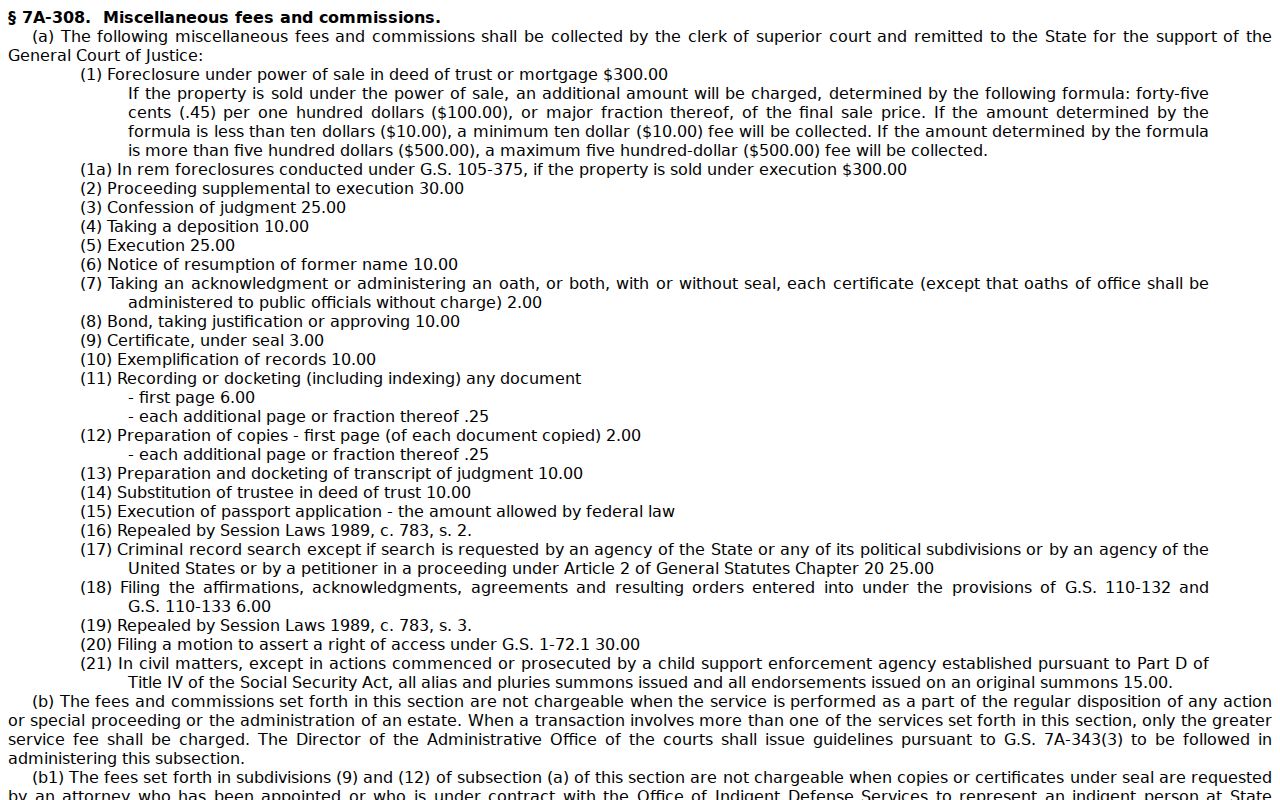
Knowing the fee schedule helps. It lets you ask the Johnston County Clerk a concrete question about your request instead of guessing at a final bill.
Johnston Court Record Payments
Johnston County has one local payment rule that trips up mailed docket requests. No personal checks. At the cashier window you can pay with cash. You can also use a credit or debit card that carries processing fees. A money order or a certified check works too. Mail orders should include a money order or certified check made out to Johnston County Clerk of Superior Court. Send it to PO Box 297, Smithfield, NC 27577. Confirm the amount first. The clerk may need a page count or a service decision before the cost is set. The Judicial Branch court-cost resource lists the payment options and card fees shown on this Johnston County records page.
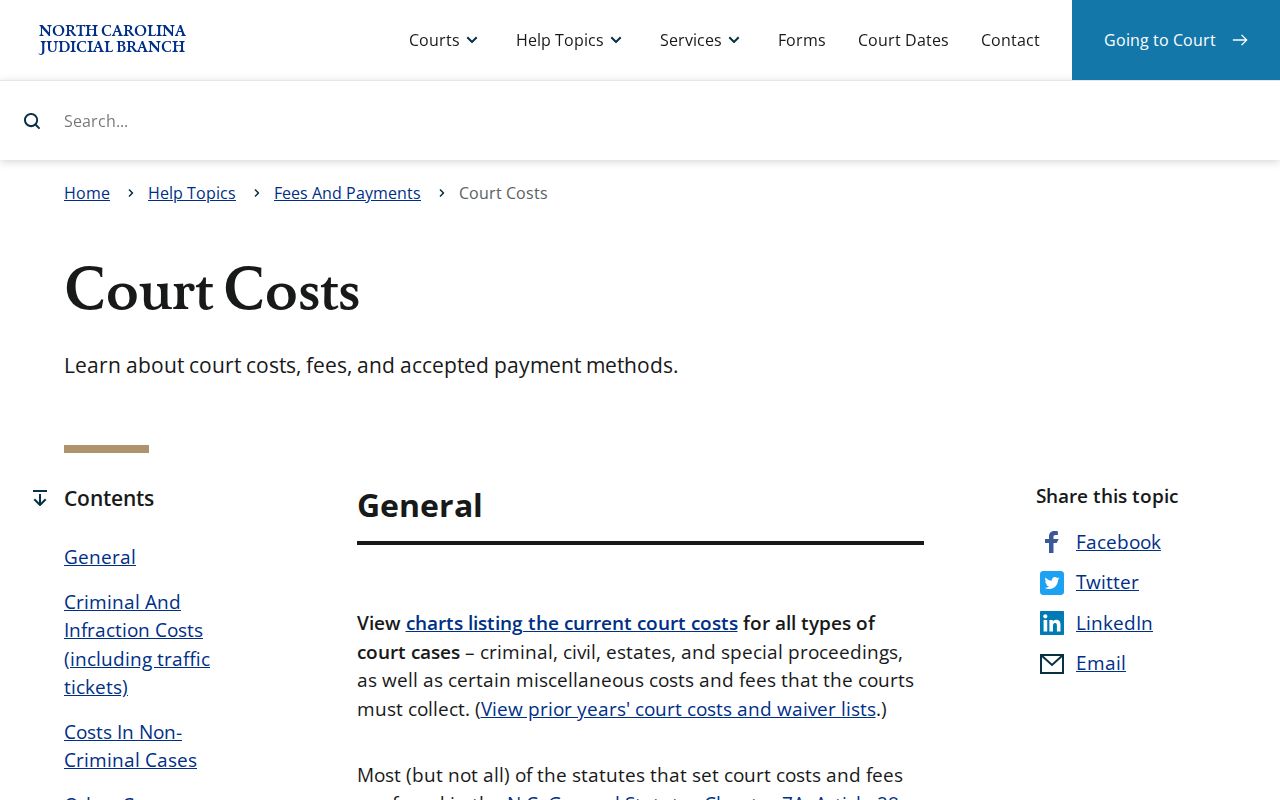
How you pay is one thing. Whether a Johnston County court file is even open to inspection or copying is a separate question with its own rules.
Access Rules for Court Records
Two bodies of law govern access to Johnston County court records: North Carolina public-records law and the court-record access rules. Under G.S. 7A-109, clerk records stay open during regular office hours unless a law closes them. G.S. 132-6.2 covers inspection, copies, and limited special-service charges. Portal is handy, yet restricted material may never show up there or be open for routine review.
Key Johnston County access rules:
G.S. 7A-109 keeps Clerk records open during regular hours unless another law limits access.
G.S. 1-72.1 provides a motion procedure for a person asserting access to a civil judicial record or proceeding.
G.S. 7B-3000 withholds juvenile records from public inspection except under the statute's access or order rules.
G.S. 15A-151 gives expunction files confidential treatment and limits disclosure.
You cannot get sealed cases, confidential juvenile material, expunction files, or sensitive documents by going around the Clerk or the Portal's limits. Those walls stay up for good reason. For lawful access to a particular identified file, ask the Johnston Clerk directly.
Johnston Case File, Not NCAOC
The NCAOC runs a public-record request process, but only for its own administrative records. It states this plainly. The agency is not the custodian of court documents. It is not the custodian of county case information either. That distinction matters. Misdirected requests are common here. Anyone who needs a document from a Johnston court file should bring the case number to the Johnston County Clerk. The NCAOC form can fetch agency records. Yet it will not reroute a county case-file request to Smithfield. Note: Something missing from Portal? Name the specific case. Then ask the county Clerk about inspection or a copy.